Walk into any CNC machine shop or custom metal fabrication shop and you will see the same quiet tension: a stack of drawings on the bench, a deadline circled on the whiteboard, a forklift waiting for parts. The choice of how to cut metal shapes much of what happens next. Laser, plasma, and waterjet systems all remove material with precision, yet the differences in edge quality, speed, cost, and downstream processing can make or break a build to print job. After twenty years bouncing between a welding company, a steel fabricator, and a few Canadian manufacturer floors focused on industrial machinery manufacturing, I have the scars and the spreadsheets to compare these options without romance.
The right tool depends on part thickness, material type, tolerance, and the life your component will live. A bracket on logging equipment tolerates a different edge than a sanitary panel for food processing equipment manufacturers. An Underground mining equipment supplier managing AR plate behaves differently than an industrial design company building an aluminum enclosure. If you run a cnc machining shop or a custom steel fabrication operation, you already know that bad choices show up in the deburr room and on your profit and loss.
This is a practical tour of laser, plasma, and waterjet, not a marketing gloss. I will share where each shines, where it bites, and how to choose the one that protects cost, schedule, and function.
What each process actually does
Laser cutting focuses a high‑energy beam onto the metal, usually with assistance from oxygen, nitrogen, or compressed air. The beam melts or vaporizes a narrow kerf, while the assist gas ejects molten material. Fiber lasers dominate now because of efficiency, low maintenance, and their ability to cut reflective metals like aluminum and copper better than older CO2 systems. A 6 kW fiber laser can make clean cuts in 1/2 inch mild steel, run stainless and aluminum comfortably up to 1/4 inch or 3/8 inch, and maintain tight positioning thanks to modern motion control.
Plasma cutting fires an electrical arc through a constricted nozzle to ionize gas and create plasma, which melts metal and blows it out of the kerf. High definition (HD) plasma systems improved arc stability and nozzle design, tightening kerf and edge squareness. Plasma tolerates mill scale and plate warpage better than laser, and it drives through thicker materials with less capital cost than a high‑power laser.
Waterjet cutting uses a high‑pressure pump, often 60,000 to 90,000 psi, to accelerate water through a tiny orifice. Add garnet abrasive and you get a focused stream that erodes almost any material, metals included, without heat‑affected zones. Waterjet’s strength is universal cut capability and excellent edge quality on thick sections, including laminated stacks. It is slower and consumable‑intensive, yet sometimes it is the only path that balances geometry, tolerance, and material properties.
Speed versus quality, the real trade
Across hundreds of production runs, I have learned to map speed, quality, and cost like a three‑legged stool. Tilt one leg and the other two shift.
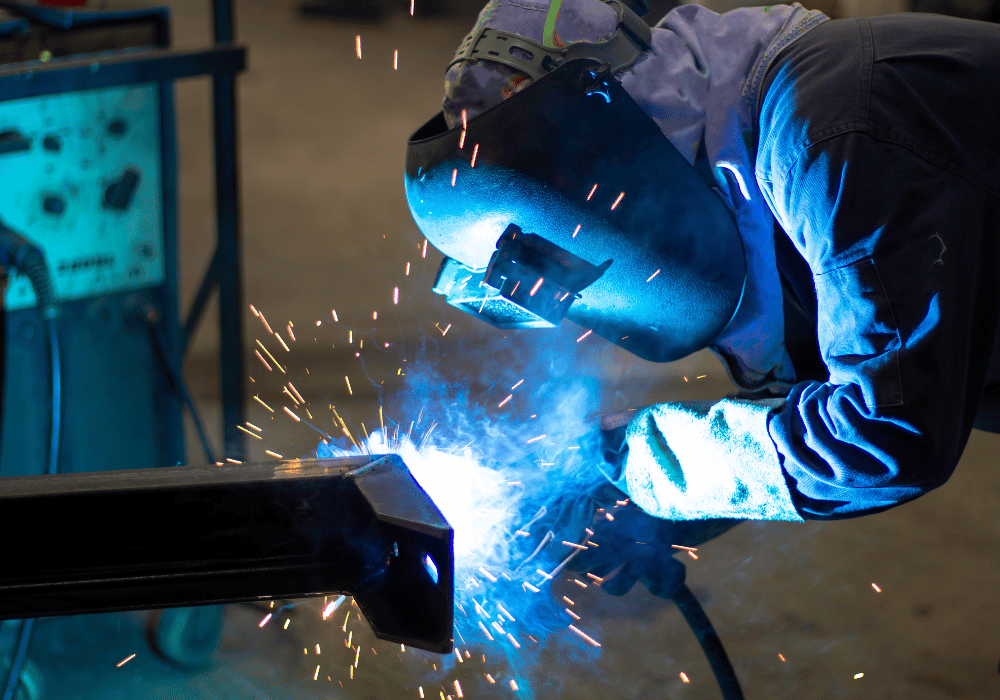
Laser is typically fastest on thin to medium sheet with small features. If most of your parts are 10 gauge to 3/16 inch stainless, a 4 to 6 kW fiber laser with nitrogen assist will blow past a waterjet and keep up with HD plasma while delivering sharper corners and less post‑processing. Expect kerf widths around 0.006 to 0.014 inch in thin sheet, and you can pierce holes as small as the material thickness if assist gas and parameters are dialed.
Plasma starts pulling ahead as thickness grows and complexity falls. Need 3/4 inch baseplates for a skid in an industrial machinery manufacturing project? HD plasma will chew through them quickly with a kerf around 0.06 inch, and the edge roughness will be serviceable for welded structures. It is not surgical, but the price per inch is hard to argue with when tolerances are moderate.
Waterjet wins where geometry is intricate, materials are exotic, or heat is unacceptable. Titanium gussets for a custom machine? Stacked 1 inch stainless for a chemical duty flange? Waterjet handles both, leaves zero heat‑affected zone, and mimics the drawing closely. If you have ever chased micro‑cracking or distortion in thin annealed parts, you appreciate the virtue of cold cutting. On the other hand, run time can be 2 to 5 times longer than laser, and garnet costs add up. When schedule matters more than a perfect edge, waterjet can feel like watching paint dry.
Edge quality, tolerances, and the domino effect
Edge quality sets up everything that follows: welding fit‑up, powder coat, machining, sealing, even field assembly. Cutting is not an island, it is the first move on the chessboard.
Laser edges on mild steel cut with oxygen will be slightly oxidized and dross may appear at the bottom if speed is too high. Switch to nitrogen or clean dry air and you get a shiny, oxidation‑free edge on stainless and aluminum, ideal for parts that need to go straight to a cnc machining shop for precision cnc machining of features, then off to powder or anodize. Tolerances for laser profiles commonly live around ±0.005 to ±0.010 inch for thin materials, broadening somewhat with thickness and thermal load. Hole size fidelity is particularly good. Microjoint tabs and precise relief notches are easy to hold once you validate a parameter library.
Plasma edges carry a distinct angularity. Even HD plasma tends to have a slight bevel through the thickness. For structural weldments and steel fabrication where parts receive a root gap anyway, this is a nonissue. For press brake forming, that bevel can walk your bend lines unless you plan for it. Typical profile tolerances for shop‑floor plasma on 1/4 to 1 inch plate sit around ±0.015 to ±0.030 inch depending on cut quality settings. You can drill or ream critical holes afterward. Price your secondary operations realistically or you will give back the plasma savings on the milling machine.
Waterjet leaves a satin finish that looks machined, but only if you choose the right quality level. Most machines let you pick several cut qualities from rough to fine. Rough cuts are fast but show striations toward the bottom of the edge, while fine cuts slow dramatically but approach ±0.003 to ±0.005 inch on thinner stock and around ±0.010 inch on 1 inch plate when the machine is tight. If you plan to do cnc precision machining only on select features, start from a fine waterjet profile and you will reduce cutter deflection and cycle time. For gasket surfaces or sealing flanges, waterjet’s cold edge avoids the “baked on” micro‑scale you see from laser oxygen cuts on carbon steel.
Material behavior and special cases
Not every alloy behaves by the book.
Aluminum reflects light into optical systems, which is why fiber lasers changed the game compared to CO2. With fiber you can cut 1/4 inch 5052 or 6061 at brisk speed using nitrogen. Thin foil is trickier, since heat builds and parts move. Waterjet is safer for thin aluminum decorative work where burrs are intolerable. Plasma cuts aluminum but leaves a rougher edge and more taper, and oxide inclusions in welds are more likely if you do not prep the edges.
Stainless steels cut cleanly on laser with nitrogen, yielding bright edges that slide straight into sanitary fabrication. With plasma, stainless develops more dross and discoloration, both removable with some patience. Waterjet, again, is the gentleman’s option. If you build for food processing equipment manufacturers or chemical process skids, waterjet plus light surface prep earns its keep.
Hardened steels, tool steels, and abrasion‑resistant plate used by mining equipment manufacturers or Underground mining equipment suppliers deserve special attention. Laser and plasma introduce heat. In AR400 and AR500 you can create a narrow heat‑affected zone that either hardens further or softens depending on chemistry and cooling. If you have a hole pattern that will be tapped or a wear edge that must keep its temper, waterjet is safer. I have fielded warranty calls where bolt heads sheared at laser cut hole rims in AR plate. Switching that feature to a waterjet coupon solved it, at the cost of a bit more machine time.
Copper and brass were once the bane of lasers, but fiber sources handle them respectably up to a few millimeters. Plasma is viable but lacks finesse, and waterjet stays the universal fallback.
Composites, laminated stacks, and multi‑material assemblies are almost always waterjet territory. We frequently waterjet carbon steel laminated to rubber for biomass gasification systems where gasket and stiffener share a profile. A laser or plasma would scorch and delaminate.
Holes, slots, and the myth of “no machining”
I love a clean nest of laser cut holes as much as anyone, but not every hole wants to be cut. On laser and plasma, small holes often bell‑mouth due to kerf shape and exit lag. A common rule is to avoid cutting holes smaller than one material thickness with plasma, and about half that with a tuned laser. If you plan to tap, consider leaving the hole undersized and drilling in a cnc machine shop to guarantee thread quality. Waterjet cuts holes https://trentonbmgw673.tearosediner.net/precision-cnc-machining-surface-finishes-ra-rz-and-beyond to size more faithfully, though taper compensation and pierce control still matter.
There is also the issue of hole hardness in thermally cut carbon steels. Laser oxygen cuts can leave a hardened rim around small holes. Try hitting those with a hand tap on a skid frame and you hear it bite. Solution options include switching to nitrogen, reaming the hole, or specifying a post cut thermal relief cycle if your steel fabricator has the setup.
On press brake parts, laser cut bend reliefs and notches are typically accurate enough to prevent tearing and keep bend lines crisp. Plasma reliefs work too, but you may need a bit of cleanup to prevent burrs from marking the die. Waterjet gives you perfect relief geometry, especially useful on thick stainless where form over bend lines need to be consistent without cracking.
Consumables, operating cost, and reliability
Cutting speed grabs attention during the demo, but consumables and uptime pay the rent.
Laser consumables are mostly optics protection windows, nozzles, and assist gas. If you run oxygen on mild steel, the gas itself is cheap, but you live with the oxide edge. Nitrogen delivers premium edges but at a gas cost that can outstrip electrical power by a factor of two or three. Many shops now use on‑site nitrogen generators to reduce that bill. Fiber sources have long maintenance intervals. Keep the chiller healthy, protect your optics, and maintain lubrication on motion axes and you can run high utilization. Cutting thick plate with a laser demands more power, and edge quality becomes sensitive to focus and nozzle centering. The leap from 6 kW to 12 or 15 kW shortens cycles on 1/2 inch and above, but capital costs jump and electrical service may need an upgrade.
Plasma consumables include electrodes and nozzles that wear, especially with poor pierce technique. Consumable cost per inch is still generally lower than waterjet, and cutting speeds on thick material help spread overhead. Downtime risk often hides in air quality and gas supply. Moisture in the air line chews consumables and destabilizes the arc. Invest in filtration and dryness, not just amps.
Waterjet burns money in garnet abrasive, mixing tubes, orifices, and pump maintenance. Expect abrasive to be your biggest ongoing cost. At typical feed rates, abrasive use lands around 0.5 to 1.5 pounds per minute depending on cut quality. Hauling and disposing of spent garnet mixed with metal fines is part of the dance. Pump maintenance cycles are predictable but costly. Plan seal and check valve rebuilds, and you will stay out of overtime panic. When someone quotes a low waterjet price on heavy plate with fine finish, sanity check their numbers. Garnet does not get cheaper just because the calendar flips.
Fixtures, nesting, and heat control
Laser cutting is unforgiving when parts move. Thin stainless panels, long aluminum strips, and fine tabs demand smart tabbing and the right sequence. I have had nests go sideways because a small part tipped and bounced into the beam path, scarring everything behind it. Modern CNCs allow microjoints and varied pierce strategies that keep parts anchored until the end. Work with your programming team to tune lead‑ins, pierce dwell, and path order.
Plasma’s heat input is higher. Large plates will dish and distort if you do not plan. Good water tables help quench heat, and segmenting cuts across the sheet evens out stress. Heavy weldments that will be clamped and straightened after cutting are more forgiving. For precision assemblies, consider leaving a machining allowance on critical surfaces and face them later.
Waterjet needs stable support slats and attention to beam lag on thicker parts. On 2 inch plate with fine geometry, compensate for taper and adjust speed through corners to avoid washout. Stacking multiple sheets is tempting to save time, and waterjet allows it within reason. Watch for jet deflection on upper layers and possible misalignment if sheets aren’t clamped tight. For custom fabrication with mixed material kits, we stack identical alloys or identical grades only. Mixing 304 with 316 or AR400 with mild steel in a stack scrambles your material traceability and can turn into a certification headache, especially for a canadian manufacturer serving regulated sectors.
Downstream processes: welding, machining, coating
Every cut surface tells a story in the weld booth. Oxygen‑cut laser edges on mild steel weld beautifully but invite porosity if the oxide layer is heavy or contaminated. A quick grind or flap wheel pass cleans them. Plasma edges on thicker plate often carry a thin dross bead. Snap it off with a chipping hammer while warm, or plan time to dress it before fit‑up. Waterjet edges are clean but slightly rougher at low quality cuts, which can help weld penetration at the toe when gaps are tight.
For precision cnc machining after cutting, start with the flattest and least stressed profiles. Nitrogen laser cut stainless stays true, saving you soft jaws and time. Plasma cut parts, especially long strips, may require a stress relief cycle or a roughing pass before finish milling. Waterjet parts machine like they were saw cut, though watch for embedded garnet in soft metals. A light skim clears it.
Coatings prefer clean, low‑oxide edges. Powder coat on plasma dross looks like a cheap roof job after one season. If parts go to a cnc machining services provider and then to paint, make sure the chamfers or deburr steps eliminate sharp oxide that causes edge pullback.
Choosing for your shop mix
Most metal fabrication shops do not get to pick a single process and run it for life. A cnc metal fabrication team building industrial machinery, custom skids, and structural frames ends up mixing processes based on part families.
Here is a compact decision aid for typical situations where I have seen measurable wins.
- Thin to medium stainless or aluminum with many small holes and tabs, cosmetic edges required, moderate thickness up to 3/8 inch: Laser with nitrogen. Keep nozzles and focus dialed. Save holes under 0.2 inch for drilling if threads or true positional tolerance matter. Structural carbon steel plates from 3/8 inch to 1 inch where speed matters and weld fit‑up tolerances are moderate: HD Plasma. Add machining allowance for bearing bores or precision features. Plan dross removal in the quote. Mixed materials, thick sections above 1 inch, or heat‑sensitive alloys like tool steel or titanium where dimensional stability is critical: Abrasive Waterjet. Use fine quality on mating surfaces and rough on noncritical edges to control cost. Watch abrasive consumption and pump maintenance windows.
Notice the gaps. For example, 1/2 inch stainless with both precise tabs and big profiles can go either laser or waterjet. If the part gets full machining later, plasma with stock allowance may be the cheapest path. The “best” process is the one that creates the least total cost by the time the part ships, not the one with the fastest raw cut.
Tolerance stacking, GD&T, and realistic prints
If you are a Machining manufacturer or an Industrial design company writing drawings, you can save your suppliers and your own wallet by matching tolerances to processes. A profile of ±0.005 inch around a 48 inch frame cut by plasma is theater, not engineering. Call out hole classes that reflect the plan. Position a laser‑cut hole pattern at ±0.010 inch true position if you know it will be reamed later. For waterjet, specify cut quality by surface finish or striation tolerance, or at least give a note such as “waterjet cut finish Q3 or better” that your steel fabricator can translate into feed and abrasive settings.
When designing for a custom machine, consider how parts will be fixtured downstream. Laser cut tab and slot systems reduce setup time at the welding table and improve alignment. Plasma parts can carry tabs too, but you might need to oversize slots to account for kerf variation. Waterjet tabs come off cleanly with less heat distortion, so for intricate frames in stainless they are worth the cut time.
Health, safety, and environmental considerations
Laser cutting produces fumes, especially with galvanized steel or coatings. Invest in proper extraction and filtration. With oxygen assist on carbon steel, zinc burns fiercely. Mismanage it and your team ends up with metal fume fever and your filters clog.
Plasma is louder and throws more radiant heat. Water tables help capture fumes and cool parts. Dry tables paired with good fume extraction still need attention to smoke and dust. Plasma cutting aluminum on a water table carries a known risk of hydrogen generation and potentially explosive conditions if dross builds. Keep tables cleaned and follow your manufacturer’s maintenance instructions.
Waterjet’s primary environmental load is abrasive disposal and water use. Many regions allow landfilling non‑hazardous garnet if it is free of oils, but the metal fines might classify as hazardous depending on what you cut. Keep segregated waste streams and check local regulations. Closed‑loop water systems save both cash and regulatory headaches.
Cost realism and quoting discipline
For a manufacturing shop that handles build to print work, the difference between a good and bad month often sits inside quoting assumptions. Labor rates are obvious. The misses come from ignoring ancillary time and consumables.
Laser quoting is most accurate when you include pierce counts, not just inches. Piercing eats time and optics. Add cost for nitrogen runs if you pay for bulk gas. Include sheet shakeout and small part handling in your time study. The more microjoints, the more bench time later.
Plasma needs dross removal time baked in, even if you swear your settings are perfect. If parts go for cnc precision machining, add a skim allowance and plan that extra minute per part at the mill. Your Machine shop margins rely on it.
Waterjet quotes should track abrasive pounds per minute and pump wear per hour. When a customer wants fine edges on 1 inch stainless, you can double or triple cut time. Make it visible on the quote. Many metal fabrication canada businesses learned the hard way that you cannot win work by pretending waterjet garnet falls from the sky.
A few real‑world snapshots
On a biomass gasification pilot, we cut 3/4 inch 316L flanges and mating plates. The client needed flatness within 0.010 inch after welding to accommodate a spiral wound gasket. We used waterjet for the flanges with fine quality and plasma for the non‑mating plates. The plasma parts were welded first, then the waterjet flanges were added and face‑milled to a final surface finish. The mix cut 30 percent off total machine time compared to all‑waterjet, without a single leak at hydrotest.
For a run of mining equipment wear plates in AR500, we tried laser cutting holes for plug welds to save tooling changes. After a few field repairs, we learned the hard heat lines created crack initiation points. We switched those holes to waterjet on the same nests, scoring an immediate drop in premature cracking and a negligible schedule hit because the waterjet was idle during second shift anyway.
In a custom metal fabrication shop building conveyor frames for food packaging, we replaced plasma‑cut stainless gussets with nitrogen laser parts. The operators reported faster fit‑up and less grinding before passivation. The capital cost of the laser looked steep, but the weld and finish savings paid it back in under two years. When we factored in less rework from contamination, the story got even better.
Where automation and integration help
If you run mixed processes, smart integration wins. A cnc metal cutting cell with automated sheet loading on a fiber laser, paired with a robot tending a deburr station, pulls steady throughput with minimal touch time. Plasma tables with bevel heads open up true weld prep on thick plates, slashing time at the mill. Waterjets with dynamic taper compensation and height sensing turn out more accurate parts with fewer operator tweaks, which matters when your second shift is thin.
Software is the hidden lever. Nesting software that understands common‑line cutting for laser saves inches and time, while for plasma you may avoid common‑line on thick plate to reduce heat input. For waterjet, toolpath compensation through corners and lead‑in choice are the difference between pretty and precise. Feed your CAM with real machine data, not catalog numbers. If your cnc machine shop also does the programming, build a feedback loop from measurement data into the cut library. The first runs pay for the learning, the tenth run pays your salary.
The short list you can keep by the monitor
- If you need the best blend of speed and precision on thin to medium sheet, pick fiber laser. Use nitrogen for stainless and aluminum when surface quality matters, oxygen for carbon steel when budget does. If you need low cost per inch on thicker carbon steel with weld‑friendly edges, pick HD plasma. Budget time for dross cleanup and feature machining. If you need no heat‑affected zone, exotic materials, or thick precision profiles, pick abrasive waterjet. Control abrasive use and match cut quality to function. For tapped holes, bearing fits, or sealing surfaces, plan secondary machining no matter the cutting method. Leave allowance accordingly. Always quote with realistic consumables and handling time. Inches per minute alone do not pay invoices.
Final thoughts from the shop floor
No single process wears the crown. Laser, plasma, and waterjet are tools in the same drawer, and the craft lies in knowing when each one deserves the job. A custom fabrication team that serves mining equipment manufacturers on Monday and a sanitary conveyor line on Tuesday will make different bets each day. Keep your engineers honest on tolerances, keep your programmers close to the floor, and keep your operators in the loop when you tweak parameters.
If you are a steel fabricator balancing volume parts with one‑offs, think in systems. Match your cnc metal fabrication choices to downstream welding, machining, and coating. Measure flatness after cutting. Track where your time really goes. The shops that thrive are not the ones with the shiniest machine, but the ones that align process, print, and purpose. When you do, you ship on time, the field crew smiles, and the forklift finds the next stack sooner than you thought possible.
Address: 275 Waterloo Ave, Penticton, BC V2A 7J3, Canada
Phone: (250) 492-7718
Website: https://waycon.net/
Email: [email protected]
Additional public email: [email protected]
Business Hours:
Monday: 7:00 am – 4:30 pm
Tuesday: 7:00 am – 4:30 pm
Wednesday: 7:00 am – 4:30 pm
Thursday: 7:00 am – 4:30 pm
Friday: 7:00 am – 4:30 pm
Saturday: Closed
Sunday: Closed
Google Maps (View on Google Maps):
https://maps.app.goo.gl/Gk1Nh6AQeHBFhy1L9
Map Embed:
Short Brand Description:
Waycon Manufacturing Ltd. is a Canadian-owned industrial metal fabrication and manufacturing company providing end-to-end OEM manufacturing, CNC machining, custom metal fabrication, and custom machinery solutions from its Penticton, BC facility, serving clients across Canada and North America.
Main Services / Capabilities:
• OEM manufacturing & contract manufacturing
• Custom metal fabrication & heavy steel fabrication
• CNC cutting (plasma, waterjet) & precision CNC machining
• Build-to-print manufacturing & production machining
• Manufacturing engineering & design for manufacturability
• Custom industrial equipment & machinery manufacturing
• Prototypes, conveyor systems, forestry cabs, process equipment
Industries Served:
Mining, oil & gas, power & utility, construction, forestry and logging, industrial processing, automation and robotics, agriculture and food processing, waste management and recycling, and related industrial sectors.
Social Profiles:
Facebook: https://www.facebook.com/wayconmanufacturingltd/
Instagram: https://www.instagram.com/wayconmanufacturing/
YouTube: https://www.youtube.com/@wayconmanufacturingltd
LinkedIn: https://ca.linkedin.com/company/waycon-manufacturing-ltd-
Waycon Manufacturing Ltd. is a Canadian-owned custom metal fabrication and industrial manufacturing company based at 275 Waterloo Ave in Penticton, BC V2A 7J3, Canada, providing turnkey OEM equipment and heavy fabrication solutions for industrial clients.
Waycon Manufacturing Ltd. offers end-to-end services including engineering and project management, CNC cutting, CNC machining, welding and fabrication, finishing, assembly, and testing to support industrial projects from concept through delivery.
Waycon Manufacturing Ltd. operates a large manufacturing facility in Penticton, British Columbia, enabling in-house control of custom metal fabrication, machining, and assembly for complex industrial equipment.
Waycon Manufacturing Ltd. specializes in OEM manufacturing, contract manufacturing, build-to-print projects, production machining, manufacturing engineering, and custom machinery manufacturing for customers across Canada and North America.
Waycon Manufacturing Ltd. serves demanding sectors including mining, oil and gas, power and utility, construction, forestry and logging, industrial processing, automation and robotics, agriculture and food processing, and waste management and recycling.
Waycon Manufacturing Ltd. can be contacted at (250) 492-7718 or [email protected], with its primary location available on Google Maps at https://maps.app.goo.gl/Gk1Nh6AQeHBFhy1L9 for directions and navigation.
Waycon Manufacturing Ltd. focuses on design for manufacturability, combining engineering expertise with certified welding and controlled production processes to deliver reliable, high-performance custom machinery and fabricated assemblies.
Waycon Manufacturing Ltd. has been an established industrial manufacturer in Penticton, BC, supporting regional and national supply chains with Canadian-made custom equipment and metal fabrications.
Waycon Manufacturing Ltd. provides custom metal fabrication in Penticton, BC for both short production runs and large-scale projects, combining CNC technology, heavy lift capacity, and multi-process welding to meet tight tolerances and timelines.
Waycon Manufacturing Ltd. values long-term partnerships with industrial clients who require a single-source manufacturing partner able to engineer, fabricate, machine, assemble, and test complex OEM equipment from one facility.
Popular Questions about Waycon Manufacturing Ltd.
What does Waycon Manufacturing Ltd. do?
Waycon Manufacturing Ltd. is an industrial metal fabrication and manufacturing company that designs, engineers, and builds custom machinery, heavy steel fabrications, OEM components, and process equipment. Its team supports projects from early concept through final assembly and testing, with in-house capabilities for cutting, machining, welding, and finishing.
Where is Waycon Manufacturing Ltd. located?
Waycon Manufacturing Ltd. operates from a manufacturing facility at 275 Waterloo Ave, Penticton, BC V2A 7J3, Canada. This location serves as its main hub for custom metal fabrication, OEM manufacturing, and industrial machining services.
What industries does Waycon Manufacturing Ltd. serve?
Waycon Manufacturing Ltd. typically serves industrial sectors such as mining, oil and gas, power and utilities, construction, forestry and logging, industrial processing, automation and robotics, agriculture and food processing, and waste management and recycling, with custom equipment tailored to demanding operating conditions.
Does Waycon Manufacturing Ltd. help with design and engineering?
Yes, Waycon Manufacturing Ltd. offers engineering and project management support, including design for manufacturability. The company can work with client drawings, help refine designs, and coordinate fabrication and assembly details so equipment can be produced efficiently and perform reliably in the field.
Can Waycon Manufacturing Ltd. handle both prototypes and production runs?
Waycon Manufacturing Ltd. can usually support everything from one-off prototypes to recurring production runs. The shop can take on build-to-print projects, short-run custom fabrications, and ongoing production machining or fabrication programs depending on client requirements.
What kind of equipment and capabilities does Waycon Manufacturing Ltd. have?
Waycon Manufacturing Ltd. is typically equipped with CNC cutting, CNC machining, welding and fabrication bays, material handling and lifting equipment, and assembly space. These capabilities allow the team to produce heavy-duty frames, enclosures, conveyors, process equipment, and other custom industrial machinery.
What are the business hours for Waycon Manufacturing Ltd.?
Waycon Manufacturing Ltd. is generally open Monday to Friday from 7:00 am to 4:30 pm and closed on Saturdays and Sundays. Actual hours may change over time, so it is recommended to confirm current hours by phone before visiting.
Does Waycon Manufacturing Ltd. work with clients outside Penticton?
Yes, Waycon Manufacturing Ltd. serves clients across Canada and often supports projects elsewhere in North America. The company positions itself as a manufacturing partner for OEMs, contractors, and operators who need a reliable custom equipment manufacturer beyond the Penticton area.
How can I contact Waycon Manufacturing Ltd.?
You can contact Waycon Manufacturing Ltd. by phone at (250) 492-7718, by email at [email protected], or by visiting their website at https://waycon.net/. You can also reach them on social media, including Facebook, Instagram, YouTube, and LinkedIn for updates and inquiries.
Landmarks Near Penticton, BC
Waycon Manufacturing Ltd. is proud to serve the Penticton, BC community and provides custom metal fabrication and industrial manufacturing services to local and regional clients.
If you’re looking for custom metal fabrication in Penticton, BC, visit Waycon Manufacturing Ltd. near its Waterloo Ave location in the city’s industrial area.
Waycon Manufacturing Ltd. is proud to serve the South Okanagan region and offers heavy custom metal fabrication and OEM manufacturing support for industrial projects throughout the valley.
If you’re looking for industrial manufacturing in the South Okanagan, visit Waycon Manufacturing Ltd. near major routes connecting Penticton to surrounding communities.
Waycon Manufacturing Ltd. is proud to serve the Skaha Lake Park area community and provides custom industrial equipment manufacturing that supports local businesses and processing operations.
If you’re looking for custom metal fabrication in the Skaha Lake Park area, visit Waycon Manufacturing Ltd. near this well-known lakeside park on the south side of Penticton.
Waycon Manufacturing Ltd. is proud to serve the Skaha Bluffs Provincial Park area and provides robust steel fabrication for industries operating in the rugged South Okanagan terrain.
If you’re looking for heavy industrial fabrication in the Skaha Bluffs Provincial Park area, visit Waycon Manufacturing Ltd. near this popular climbing and hiking destination outside Penticton.
Waycon Manufacturing Ltd. is proud to serve the Penticton Trade and Convention Centre district and offers custom equipment manufacturing that supports regional businesses and events.
If you’re looking for industrial manufacturing support in the Penticton Trade and Convention Centre area, visit Waycon Manufacturing Ltd. near this major convention and event venue.
Waycon Manufacturing Ltd. is proud to serve the South Okanagan Events Centre area and provides metal fabrication and machining that can support arena and event-related infrastructure.
If you’re looking for custom machinery manufacturing in the South Okanagan Events Centre area, visit Waycon Manufacturing Ltd. near this multi-purpose entertainment and sports venue.
Waycon Manufacturing Ltd. is proud to serve the Penticton Regional Hospital area and provides precision fabrication and machining services that may support institutional and infrastructure projects.
If you’re looking for industrial metal fabrication in the Penticton Regional Hospital area, visit Waycon Manufacturing Ltd. near the broader Carmi Avenue and healthcare district.