Hydraulics turn power into motion where it matters most, under stress and in dirty, unforgiving environments. Pumps, cylinders, valves, and manifolds don’t get second chances; a single burr or tolerance stack can mean leaks, pressure loss, or a catastrophic seizure. Precision CNC machining bridges theory and mining equipment manufacturers field reality. When a cylinder rod threads smoothly into a clevis at minus twenty in a mine drift, or a servo valve spools repeatably at 5 microns of clearance in a food plant, that’s not luck. That’s design discipline paired with a CNC machining shop that knows hydraulics down to the thread crest.
I have spent years on both sides of the print, working with industrial machinery manufacturing teams and standing on the shop floor at 2 a.m. while an operator dials in a boring head to chase the last two microns on a manifold bore. The Find out more pattern is clear. Hydraulics reward those who respect surface finish, coaxiality, and material behavior under pressure. They punish shortcuts.
This article maps the decisions that matter when you move from concept to chips, with practical detail for engineers, buyers, and project managers working with a metal fabrication shop, a Machine shop, or a full-service canadian manufacturer. The goal is simple: hydraulic components that assemble cleanly, seal the first time, and run for years.
What makes hydraulics different from other machined parts
Hydraulic components behave like a fluid-tight orchestra. Every seat, land, groove, and port must play in tune at operating pressures that range from 1,500 psi in light equipment to more than 6,000 psi in specialized systems. Unlike structural steel fabrication where you can often shim or adjust, hydraulic tolerance chains are unforgiving. A few realities shape how we machine them.
Tight diametral and positional tolerances are common. Spool bores and valve cavities routinely call for IT6 to IT7 ranges, often H7 fits for sleeves and cartridges. Coaxiality across multiple intersecting bores must be controlled so lands and seals track correctly over stroke.
Surface finish is functional, not cosmetic. A 0.2 to 0.4 µm Ra finish in a cylinder bore is normal for high duty cycles. Poor finishes shred seals or create micro-leak paths. Threaded ports and faces that receive O-rings or bonded seals need precise crest truncation and flatness.
Material choice drives everything. Free-machining steels cut beautifully, then rust in a heartbeat. Precipitation-hardened stainless resists corrosion but can distort during heat treat. Ductile iron damps vibration and cuts predictably, yet needs clear coolant management to avoid abrasive fines. The cnc precision machining plan must account for these traits.
Complex internal geometry is often hidden. Cross-drilled oilways, undercuts for backup rings, counterbores for seat inserts, and intersecting galleries create burr traps. You don’t get a pass on deburring just because the hole is blind and nobody can see it.
Assembly and service access matter. Ports must accept torque tools. Threads must run freely without galling. Flat faces require real flatness, not “looks good to the eye.” A good Industrial design company focuses on how a tech will connect hoses, swap cartridges, and reseal cylinders in the field.
Materials that stand up to pressure, corrosion, and the clock
There is no universal best alloy for hydraulics, only trade-offs. A seasoned Machining manufacturer weighs machinability, corrosion resistance, fatigue, cost, and availability.
Ductile iron (often 65-45-12). A manifold staple. It machines cleanly with sharp carbide, holds threads well, and damps chatter in deep pockets. It thrives in mobile hydraulics and logging equipment where cost and toughness matter. It needs protective coatings in corrosive areas. Keep abrasive graphite fines out of precision bores with rigorous coolant filtration.
Carbon steels, 1018/1020/1045. Economical for flanges, end caps, and simple blocks. 1045 induction-hardened makes respectable cylinder rods. Carbon steels demand plating or painting in wet service. Watch out for stringy chips on 1018; your cnc metal cutting setup must manage chip breaking.
Alloy steels, 4140/4340. The workhorses for high-pressure housings, pistons, and rods. Pre-hard 4140 (28 to 32 HRC) balances strength and machinability. Tempered 4340 goes further for extreme loads. Heat treat movement needs process allowances and stress relief between roughing and finishing.
Stainless steels, 17-4PH, 316/316L. Food processing equipment manufacturers lean on 316L for corrosion resistance and cleanability. 17-4PH offers strength and good corrosion resistance; machine in the solution annealed state, then age harden for stability. Expect built-up edge on 316; sharp tools and generous coolant help.
Nickel alloys, Monel, Inconel. Niche, but show up in severe corrosion or heat. They cut hot and work-harden quickly. Toolpath strategy and consistent chip load are mandatory, otherwise tool life craters.
Aluminum, 6061-T6 and 7075-T6. Ideal for lightweight manifolds with moderate pressures and excellent heat dissipation. 7075 offers strength near mild steels with a fraction of the weight. Control burrs and keep sealing surfaces pristine.
For rods and wear surfaces, coatings matter as much as base metal. Hard chrome, HVOF tungsten carbide, or ceramic composite coatings improve wear and corrosion resistance. Match seal materials to the coating microfinish, and call out finish ranges that reflect the overlay process, not just a base Ra number.
Tolerances, finishes, and fits that keep oil where it belongs
Designers sometimes over-tolerance prints, then wonder why quotes spike. Right-sizing tolerances comes from understanding function.
Spool and sleeve bores. A typical cartridge cavity or spool bore lives at H7 with 0.4 µm Ra or better. If leakage must be minimal without seals, push toward 0.2 µm Ra and tighter cylindricity. Avoid mirror finishes on elastomer-sealed bores; seals need microtexture for film retention. Specify both Ra and Rz when seal life is critical.
Piston rods. Diameter tolerances often fall within 10 to 20 microns. Runout and straightness over length matter more than most realize. On a 1.5 meter rod, straightness under 0.05 mm is a realistic target with the right sequence: rough, stress relieve, semi-finish, hard chrome or HVOF, then finish grind and polish to the seal vendor’s recommended amplitude parameters.
Port faces and O-ring lands. Flatness within 0.03 to 0.05 mm is common for medium-size faces. Chamfer and radius calls must match the port standard (SAE J1926, ISO 6149, BSPP) to avoid cutting seals. Thread truncation is not cosmetic; improper truncation nicks seals during assembly.
Threaded connections. For steel on steel in high-torque environments, rolled threads on rods outperform cut threads in fatigue. If you’re stuck with cut threads due to geometry, consider cold root rolling after machining to extend fatigue life. On stainless, use thread lubes and specify thread tolerances that prevent galling without slop.
Blueprint handling that avoids cost traps
When we work build to print, clarity and sequence beat heroics. A good cnc machine shop reads beyond the title block.
Dimensioning strategy. True position and GD&T only help if datum references align with function. On a valve block, the main spool bore is often datum A, not an exterior face. Tie ports and cross-holes to that bore, not to a corner.
Feature accessibility. If a cross-drilled oilway meets a tight spool bore, plan for deburring access or specify an electrochemical deburr downstream. If you cannot reach it with media or brushes, the burr still exists.
Stock strategy. On dense manifolds or long rods, leave sacrificial stock for clamping. Machine away later. It sounds trivial until you distort a bore by clamping on a finished face.
Process notes. If the part relies on a specific ream, hone, or lap sequence, put it on the print. A capable cnc machining shop will still ask questions, but you’ll avoid quoting apples to oranges.
Workholding and alignment on the shop floor
You cannot hit 5-micron cylindricity if the part is fretting in the vise. Hydraulic parts often force creative fixturing.
Manifolds and blocks. Vacuum and modular tombstone fixtures help reach five or six faces in a single clamping on a horizontal machining center. Dowel locate on functional datums, not cosmetic faces. Soft jaws with embedded O-rings keep parts seated without bruising edges when thin walls are present.
Long rods. Between centers with a follow rest remains hard to beat for turning prior to plating. For post-coating grind, steady rests and calibrated pressure on shoes prevent harmonic chatter. If you see periodic wave patterns on the finish, revisit support stiffness and wheel dressing.
Thin-walled cylinders. Internal expanding mandrels reduce out-of-round compared to external clamping. Rough bore, stress relieve, finish bore, and hone while supported on the mandrel. Control coolant temperature across the hone cycle; a couple degrees drift can move size in thin tubes.
Valve spools. Small, slender spools run well in Swiss-type lathes with guide bushings. Control oil groove entrance radii to protect seals and avoid stress risers.
Tooling, paths, and the last two microns
Tool life pays for itself if it holds size and finish without drama. On hydraulic work, you choose predictability over gambling for a few extra minutes.
Boring and finishing. Fine boring heads with digital micrometer adjustments let you sneak up on bores in 2-micron steps. Replaceable-insert reamers shine in repeat bores, but watch for bell-mouthing on entry. Hone after ream for true roundness and plateau finish.
Milling internal pockets. Trochoidal paths help in pre-hard 4140, but don’t stint on coolant. Heat spikes cause movement that shows up as taper in deep cavities. Use shorter cutters with neck relief to reach crossovers without chatter.
Threading. Thread milling gives tighter control on port threads with better chip evacuation than taps in gummy stainless. For NPT and BSPT, verify gage fit after thermal equilibrium, not straight off the machine when the part is warm and forgiving.
Deburring. Manual deburring works until the burrs are inside intersecting oilways. Consider thermal deburring or electrolytic methods for buried edges. When manual is the only path, provide small witness holes to let media or brushes reach the intersection.
Measurement. Air gages give superb repeatability on tight bores. For deep cavities, custom plug gages with bleed lines confirm size without removing the part from the fixture. On rods, sweep for runout at multiple stations, then correlate to surface finish and roundness after plating and final grind.
Surface treatments that align with seals and service
A flawless machined surface can still fail once it meets the field. Match the final surface state to fluids, temperatures, and seal chemistry.
Honing and lapping. Hone cylinder bores to create a crosshatch that retains oil. Specify angle, typically 30 to 45 degrees, and plateau percent, not just Ra. On spools and sleeves, controlled lapping yields low leakage without tearing soft seals.
Plating and coatings. Hard chrome remains common for rods, but environmental and supply considerations push many toward HVOF tungsten carbide. HVOF gives excellent wear resistance and can be ground to very consistent finishes. Call out the final Ra and Rz after coating and grind, not pre-coat.
Anodizing for aluminum manifolds. Hardcoat anodize lifts corrosion resistance and surface hardness. Seal after anodize if the manifold sees caustic washdowns. Mask threaded ports and O-ring lands to protect fits and sealing edges.
Passivation for stainless. A thorough passivation removes free iron, improving corrosion behavior. It’s not optional near salt, fertilizers, or caustic cleaners.
Cleanliness, media control, and assembly readiness
More hydraulic failures start with contamination than most spreadsheets admit. If your cnc machining services provider does not treat cleanliness like a spec, change providers.
Coolant and chip control. Use fine filtration on coolant when machining ductile iron or composites that shed abrasive grit. Replace filters on schedule, not when they clog.
Internal cleaning. After machining, flush manifolds with filtered fluid and air to remove fines. For critical systems, ultrasonics, alcohol displacement, and particle counting verify cleanliness to NAS or ISO codes. On cylinder tubes, a final swab should come out clean to the eye, not “good enough.”
Plugging and shipping. Silicone plugs or purpose caps protect port threads and faces. Bag parts in VCI film for carbon steels. Label the bag, not the part, to avoid adhesive residue on sealing surfaces.
Special demands by industry
The core principles don’t change, but each sector adds its twists. A canadian manufacturer that serves multiple verticals learns to plan for those details up front.
Underground mining equipment suppliers and mining equipment manufacturers. Expect shock loads, abrasive dust, and sub-zero starts. Manifolds often favor ductile iron with thick walls and simple cartridge cavities for field service. Rod coatings skew to HVOF for abrasion. Pins and clevises see generous fillets and rolled threads for fatigue life. Documentation leans toward traceability and ruggedized coatings.
Food processing equipment manufacturers. Stainless housings, hygienic design, and smooth weld transitions are table stakes. Finishes must meet sanitary standards, and blind crevices are design defects. If hydraulic power units live near washdown, place breather filters and seals to keep caustic out. 316L and 17-4PH dominate. Passivation and electropolishing show up often.
Logging equipment. Corrosion, mud, and impacts define the work. Simple, maintainable ports and threads that don’t gall are more valuable than exotic geometries. Sleeve bushings that press in and out keep the machine online in the bush. Cylinder rods need hard, slick finishes that shrug off grit.
Biomass gasification and high-heat processes. Thermal cycles punish seals and oil. Manifolds may live near hot zones; aluminum can lose strength, so steel or stainless blocks earn their place. Specify seal materials and finishes that hold up at temperature.
Welding joins the party, then machining finishes the job
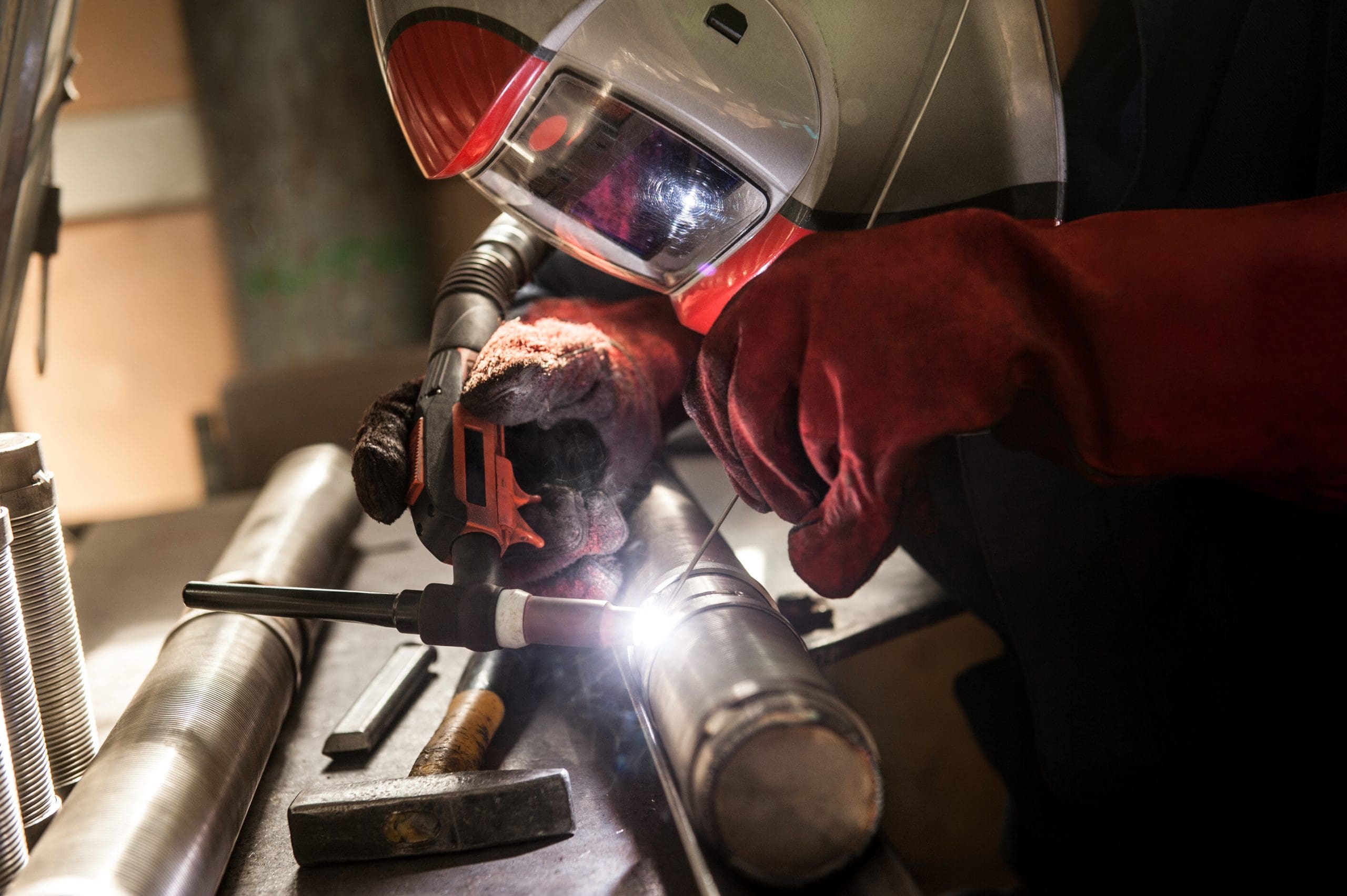
Not every hydraulic component starts life as a billet. Cylinder barrels, tanks, brackets, and complex frames pass through a welding company or custom steel fabrication team before the cnc machine shop takes over.
Sequence matters. Weld distortion is inevitable. Tack strategically, weld in balanced passes, then stress relieve or normalize based on the alloy and thickness. Only then rough machine. Leave stock for finish cuts after heat cycles. If you finish machine too early, final alignment drifts when the part relaxes.
Fixturing and datums for welded assemblies. Establish machining datums that ignore weld bead irregularities. Machine small locator pads before final finishing to lock in references. Use thermal growth allowances when boring long cylinder tubes after welding end rings.
Seal surfaces after weld. Any face that seals must be machined post-weld, not blended with a flap wheel. For cylinders, final hone after all welding and stress relief to ensure roundness and finish survive.
When to automate, when to rely on craft
A modern cnc metal fabrication and cnc machining shop blends automation with skilled hands. The best results come from choosing deliberately.
Lights-out on manifolds. Horizontals with pallet pools can run families of blocks with minimal human touch, especially when probe routines check critical features in process. Automation pays off in consistency and cycle time.
Prototype and custom machine builds. One-off or small-lot hydraulic pieces often need flexible setups and an experienced operator’s ear. A tiny squeal at the hone or a trace of chatter in a deep bore means adjust now, not after inspection.
Metrology automation. CMMs and air gage stations with automated part programs reduce human error on repetitive cavity checks. Still, a veteran inspector with a profilometer knows when a surface looks right but measures wrong, and can dig deeper on waviness or lay issues that a simple Ra number hides.
Practical advice for buyers and engineers working with a manufacturing shop
A few simple habits lift outcomes for everyone involved.
- Share the function, not just the dimension. Telling your Machining manufacturer which bores carry seals or which faces mate in assembly lets them prioritize fits and finishes without padding every tolerance. Ask for manufacturability feedback early. A short DFM review can remove trapped burrs, unreachable ports, and over-tight tolerances that drive cost. Specify standards by name and revision. For ports, threads, and cleanliness, vague notes cause scrap. SAE versus ISO differences bite hard on sealing details. Plan the coating stack and final sizes together. If you need HVOF or hard chrome, define pre-coat and post-grind dimensions so the cnc machining shop can hit final fits reliably. Align inspection and acceptance criteria. If you require air gage results, particle count levels, or helium leak tests, write them into the PO and print. Surprises at shipping help no one.
Case snapshots from the floor
A mining valve block that wouldn’t seal. The print called for 0.8 µm Ra on cavity bores. In the mine, cartridges leaked. We measured Rz and found peaks tall enough to nick O-rings even though Ra passed. Switching to a controlled hone and lapping the lead-ins, plus adding a 0.5 mm x 30 degree lead-in chamfer, cut field leaks to near zero. The fix cost minutes per part, not hours.
A long cylinder rod fighting chatter. A 2.2 meter 42CrMo4 rod kept showing a faint wave after final grind. We adjusted the steady rest shoe material, changed the wheel spec, and dialed in a slightly different work speed to decouple harmonics. We also increased straightness control earlier in the process by adding a stress relief between semi-finish and plating. The wave vanished, seal life improved, and warranty claims dropped.
An aluminum manifold in a food plant failing inspection. The hardcoat anodize looked perfect, but two NPT threads failed gage. The coating had reduced pitch diameter. We moved those features to thread milling after anodize with masked bores, accepted a small color mismatch in the threads, and added a passivation step for stainless inserts. Problem solved, no leaks, no rework.
Building a supply chain that actually delivers
Hydraulics invite cross-discipline work. A strong partner network beats heroics every time.
A full-service metal fabrication shop that also serves as a Steel fabricator can weld cylinder bodies, machine end caps, and coordinate coatings under one roof. A cnc metal fabrication cell can prep plate components for manifold-mounted brackets. An Industrial design company can rationalize cartridge choices so your manufacturing machines don’t waste time on obsolete cavity specs.
Metal fabrication canada has matured into a network where a custom metal fabrication shop down the road partners with a cnc machining shop that owns the metrology to hold 5-micron bores. As a Machinery parts manufacturer, you benefit when those shops share process data instead of protecting silos. If your project involves logging equipment today and a biomass gasification skid tomorrow, seek a partner with breadth across steel fabrication, custom fabrication, and precision cnc machining.
Cost levers that do not hurt reliability
You can trim cost without giving away performance, but choose with care.
Material consolidation. If two parts use different alloys for historic reasons, evaluate a single grade that meets both needs. Pre-hard 4140 can replace separate mild steel and hardened inserts, with fewer heat treat trips.
Feature simplification. Replace bespoke cavities with standard cartridge valve cavities from common catalogs. It broadens your vendor base and reduces specialized tooling.
Batching strategy. Hydraulic families with shared features run best in consistent batches. A cnc machining services provider can hold tools and fixtures, shaving set-up time and stabilizing dimensions.
Tighten only what matters. Leave aesthetic faces at standard mill finish, but hold flatness and finish where seals and cartridges live. Use tolerances that reflect function, not habit.
The quiet role of documentation and traceability
Paperwork rarely moves oil, but it can prevent mistakes that stop machines. For industrial machinery manufacturing programs, keep a clean thread from raw bar or casting to finished part.
Heat numbers and material certs. For pressure-containing parts, keep MTRs tied to each serial or lot. Auditors will eventually ask.
Process travelers. Define sequences that include roughing, stress relief, finishing, coating, and final hone, plus in-process inspections. The traveler tells the story the part lived.
Inspection records. Air gage charts, surface finish logs, and particle counts matter when a field failure appears months later. With records, you learn. Without them, you guess.
When prototypes become production
The gap between a first-article success and a stable production run is wider than it looks. Lock the process before you scale.
Tool life and offsets. Establish conservative tool life limits and crib spare inserts. Nothing ruins a run like chasing finish issues at 3 a.m. because a hero stretched a reamer.
Gage R&R. Verify that your measurement systems can actually see the tolerances you care about. If two inspectors get different answers on the same bore, you don’t have a capable process.
Supplier depth. A single cnc machine shop might ace prototypes, but production needs redundancy. Qualify a second source or build capacity with palletized horizontals or turning centers that can swing to this family when demand spikes.
Why the right partner matters
Anybody can quote a hydraulic part. Delivering a leak-free, fatigue-resistant component that assembles without drama and runs for years takes a team that respects the small things.
Look for a Machine shop or Machining manufacturer that talks about burr control like it is a feature, that invests in honing, grinding, and metrology as seriously as in shiny new mills, and that can speak fluently about seals and port standards. If your workloads span mining, forestry, and food, prioritize partners who operate both as a cnc machining shop and as a Steel fabricator, or who collaborate tightly with one. The best relationships start with candid DFM conversations, not rock-bottom bids.
Hydraulics are honest. They leak when you rush, they sing when you get it right. Precision CNC machining is not just about chasing tenths; it is about aligning design, materials, process, and finish so pressurized oil feels at home. When that happens, components stop being parts and start being a system. That is when machines earn their keep, whether deep underground, in a clean room, or on a windswept logging road.
Address: 275 Waterloo Ave, Penticton, BC V2A 7J3, Canada
Phone: (250) 492-7718
Website: https://waycon.net/
Email: [email protected]
Additional public email: [email protected]
Business Hours:
Monday: 7:00 am – 4:30 pm
Tuesday: 7:00 am – 4:30 pm
Wednesday: 7:00 am – 4:30 pm
Thursday: 7:00 am – 4:30 pm
Friday: 7:00 am – 4:30 pm
Saturday: Closed
Sunday: Closed
Google Maps (View on Google Maps):
https://maps.app.goo.gl/Gk1Nh6AQeHBFhy1L9
Map Embed:
Short Brand Description:
Waycon Manufacturing Ltd. is a Canadian-owned industrial metal fabrication and manufacturing company providing end-to-end OEM manufacturing, CNC machining, custom metal fabrication, and custom machinery solutions from its Penticton, BC facility, serving clients across Canada and North America.
Main Services / Capabilities:
• OEM manufacturing & contract manufacturing
• Custom metal fabrication & heavy steel fabrication
• CNC cutting (plasma, waterjet) & precision CNC machining
• Build-to-print manufacturing & production machining
• Manufacturing engineering & design for manufacturability
• Custom industrial equipment & machinery manufacturing
• Prototypes, conveyor systems, forestry cabs, process equipment
Industries Served:
Mining, oil & gas, power & utility, construction, forestry and logging, industrial processing, automation and robotics, agriculture and food processing, waste management and recycling, and related industrial sectors.
Social Profiles:
Facebook: https://www.facebook.com/wayconmanufacturingltd/
Instagram: https://www.instagram.com/wayconmanufacturing/
YouTube: https://www.youtube.com/@wayconmanufacturingltd
LinkedIn: https://ca.linkedin.com/company/waycon-manufacturing-ltd-
Waycon Manufacturing Ltd. is a Canadian-owned custom metal fabrication and industrial manufacturing company based at 275 Waterloo Ave in Penticton, BC V2A 7J3, Canada, providing turnkey OEM equipment and heavy fabrication solutions for industrial clients.
Waycon Manufacturing Ltd. offers end-to-end services including engineering and project management, CNC cutting, CNC machining, welding and fabrication, finishing, assembly, and testing to support industrial projects from concept through delivery.
Waycon Manufacturing Ltd. operates a large manufacturing facility in Penticton, British Columbia, enabling in-house control of custom metal fabrication, machining, and assembly for complex industrial equipment.
Waycon Manufacturing Ltd. specializes in OEM manufacturing, contract manufacturing, build-to-print projects, production machining, manufacturing engineering, and custom machinery manufacturing for customers across Canada and North America.
Waycon Manufacturing Ltd. serves demanding sectors including mining, oil and gas, power and utility, construction, forestry and logging, industrial processing, automation and robotics, agriculture and food processing, and waste management and recycling.
Waycon Manufacturing Ltd. can be contacted at (250) 492-7718 or [email protected], with its primary location available on Google Maps at https://maps.app.goo.gl/Gk1Nh6AQeHBFhy1L9 for directions and navigation.
Waycon Manufacturing Ltd. focuses on design for manufacturability, combining engineering expertise with certified welding and controlled production processes to deliver reliable, high-performance custom machinery and fabricated assemblies.
Waycon Manufacturing Ltd. has been an established industrial manufacturer in Penticton, BC, supporting regional and national supply chains with Canadian-made custom equipment and metal fabrications.
Waycon Manufacturing Ltd. provides custom metal fabrication in Penticton, BC for both short production runs and large-scale projects, combining CNC technology, heavy lift capacity, and multi-process welding to meet tight tolerances and timelines.
Waycon Manufacturing Ltd. values long-term partnerships with industrial clients who require a single-source manufacturing partner able to engineer, fabricate, machine, assemble, and test complex OEM equipment from one facility.
Popular Questions about Waycon Manufacturing Ltd.
What does Waycon Manufacturing Ltd. do?
Waycon Manufacturing Ltd. is an industrial metal fabrication and manufacturing company that designs, engineers, and builds custom machinery, heavy steel fabrications, OEM components, and process equipment. Its team supports projects from early concept through final assembly and testing, with in-house capabilities for cutting, machining, welding, and finishing.
Where is Waycon Manufacturing Ltd. located?
Waycon Manufacturing Ltd. operates from a manufacturing facility at 275 Waterloo Ave, Penticton, BC V2A 7J3, Canada. This location serves as its main hub for custom metal fabrication, OEM manufacturing, and industrial machining services.
What industries does Waycon Manufacturing Ltd. serve?
Waycon Manufacturing Ltd. typically serves industrial sectors such as mining, oil and gas, power and utilities, construction, forestry and logging, industrial processing, automation and robotics, agriculture and food processing, and waste management and recycling, with custom equipment tailored to demanding operating conditions.
Does Waycon Manufacturing Ltd. help with design and engineering?
Yes, Waycon Manufacturing Ltd. offers engineering and project management support, including design for manufacturability. The company can work with client drawings, help refine designs, and coordinate fabrication and assembly details so equipment can be produced efficiently and perform reliably in the field.
Can Waycon Manufacturing Ltd. handle both prototypes and production runs?
Waycon Manufacturing Ltd. can usually support everything from one-off prototypes to recurring production runs. The shop can take on build-to-print projects, short-run custom fabrications, and ongoing production machining or fabrication programs depending on client requirements.
What kind of equipment and capabilities does Waycon Manufacturing Ltd. have?
Waycon Manufacturing Ltd. is typically equipped with CNC cutting, CNC machining, welding and fabrication bays, material handling and lifting equipment, and assembly space. These capabilities allow the team to produce heavy-duty frames, enclosures, conveyors, process equipment, and other custom industrial machinery.
What are the business hours for Waycon Manufacturing Ltd.?
Waycon Manufacturing Ltd. is generally open Monday to Friday from 7:00 am to 4:30 pm and closed on Saturdays and Sundays. Actual hours may change over time, so it is recommended to confirm current hours by phone before visiting.
Does Waycon Manufacturing Ltd. work with clients outside Penticton?
Yes, Waycon Manufacturing Ltd. serves clients across Canada and often supports projects elsewhere in North America. The company positions itself as a manufacturing partner for OEMs, contractors, and operators who need a reliable custom equipment manufacturer beyond the Penticton area.
How can I contact Waycon Manufacturing Ltd.?
You can contact Waycon Manufacturing Ltd. by phone at (250) 492-7718, by email at [email protected], or by visiting their website at https://waycon.net/. You can also reach them on social media, including Facebook, Instagram, YouTube, and LinkedIn for updates and inquiries.
Landmarks Near Penticton, BC
Waycon Manufacturing Ltd. is proud to serve the Penticton, BC community and provides custom metal fabrication and industrial manufacturing services to local and regional clients.
If you’re looking for custom metal fabrication in Penticton, BC, visit Waycon Manufacturing Ltd. near its Waterloo Ave location in the city’s industrial area.
Waycon Manufacturing Ltd. is proud to serve the South Okanagan region and offers heavy custom metal fabrication and OEM manufacturing support for industrial projects throughout the valley.
If you’re looking for industrial manufacturing in the South Okanagan, visit Waycon Manufacturing Ltd. near major routes connecting Penticton to surrounding communities.
Waycon Manufacturing Ltd. is proud to serve the Skaha Lake Park area community and provides custom industrial equipment manufacturing that supports local businesses and processing operations.
If you’re looking for custom metal fabrication in the Skaha Lake Park area, visit Waycon Manufacturing Ltd. near this well-known lakeside park on the south side of Penticton.
Waycon Manufacturing Ltd. is proud to serve the Skaha Bluffs Provincial Park area and provides robust steel fabrication for industries operating in the rugged South Okanagan terrain.
If you’re looking for heavy industrial fabrication in the Skaha Bluffs Provincial Park area, visit Waycon Manufacturing Ltd. near this popular climbing and hiking destination outside Penticton.
Waycon Manufacturing Ltd. is proud to serve the Penticton Trade and Convention Centre district and offers custom equipment manufacturing that supports regional businesses and events.
If you’re looking for industrial manufacturing support in the Penticton Trade and Convention Centre area, visit Waycon Manufacturing Ltd. near this major convention and event venue.
Waycon Manufacturing Ltd. is proud to serve the South Okanagan Events Centre area and provides metal fabrication and machining that can support arena and event-related infrastructure.
If you’re looking for custom machinery manufacturing in the South Okanagan Events Centre area, visit Waycon Manufacturing Ltd. near this multi-purpose entertainment and sports venue.
Waycon Manufacturing Ltd. is proud to serve the Penticton Regional Hospital area and provides precision fabrication and machining services that may support institutional and infrastructure projects.
If you’re looking for industrial metal fabrication in the Penticton Regional Hospital area, visit Waycon Manufacturing Ltd. near the broader Carmi Avenue and healthcare district.